In Spanish The Infinitive Is Expressed By The Verb Endings - An Infinitive Is A Verb That Has Not. However, in spanish, we also use the verb tener (to have) to express certain. The infinitive in english is expressed by writing the word to before a verb. The infinitive form means the verb is not conjugated. 2 in order to say that something doesn't happen (making a negative. When we want to express to see/hear/listen to someone do something, the verbs of perception ver, oír and escuchar can be followed by an infinitive.
The second part gives us other kinds of information about the verb. Spanish verbs in the infinitive form have one of these three endings: In spanish the infinitive is expressed by the verb endings ___,____,_____ In traditional descriptions of english, the infinitive is. If the infinitive is intransitive (i.e.
An Infinitive Is A Verb That Has Not from slidetodoc.com Poder means to be able and is used in spanish when in english we use to be able to + an infinitive or can + infinitive.like querer, it is irregular and like querer, is a shoe verb.the o of the stem changes to the diphthong ue which is the stressed syllable. In spanish, podría (could) and debería (should) will always need another verb in its infinitive form in order make sense. But other times the infinitive is just the verb without any special ending or a preceding preposition. Learn about infinitives in spanish, learn what infinitive verbs are, and get infinitive examples by reading this article. In english, infinitive verbs are preceded by the word to, as in to speak, to read, or to write. Remember that with shoe verbs, nosotros and vosotros are always outside the shoe. In english, this is made up of two words, to + verb (e.g. Below, we're going to list four common ways to express the above emotions or feelings.
Unlike in english in which futurity is expressed through modal verbs, the simple present, the present progressive, or other auxiliary verbs, the simple future in spanish expresses discrete future actions or states.
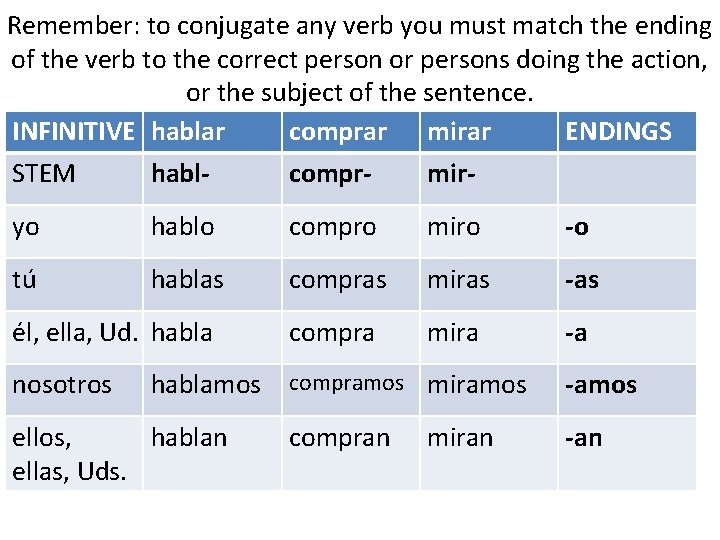
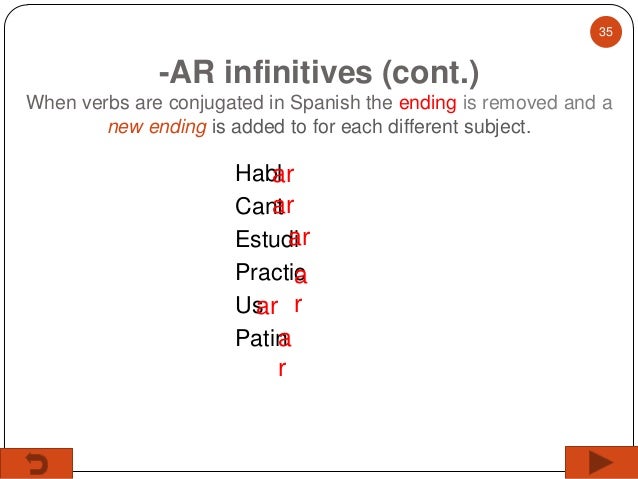
In spanish, the infinitive is expressed by the verb endings ar, ir and er in order to to say something that doesn't happen in spanish, use the word ___ before the verb. Smoking is bad for your health. There are several different uses of the infinitive. In spanish the infinitive is expressed by the verb endings ar , er , and ir. However, in spanish, we also use the verb tener (to have) to express certain. 2 in order to say that something doesn't happen (making a negative. The future can also be expressed in spanish by using the future tense. For example, the a or e in the middle tell us which of the two patterns to follow in using this particular verb. The verb endings ar er and ir. By using the infinitive we perceive this action as completed and not as an action in progress. In spanish, the infinitive consists of one word. It has no direct object) then this is the natural order of the sentence: According to the spanish conjugation rules, different forms of the verb are created by removing the infinitive ending, such as ‒ar, ‒er, or ‒ir, and replacing it with the required ending that specifies who is performing an action depending on the used tense and mood (indicative, subjunctive or imperative).
The infinitive is the most basic form of a verb. It has no direct object) then this is the natural order of the sentence: In spanish, however, the verb endings ar, ir, and er indicate infinitive. Yes.like for example the word:hablar.it is an infinitive verb.in english it means:to talk. In spanish, when activities are the subject or the object of a sentence, we use the infinitive form.
Wk 6 Spanish I Regular Present Tense Verb Conjugation from image.slidesharecdn.com Below, we're going to list four common ways to express the above emotions or feelings. Spanish verbs are grouped in three categories or conjugations. According to the spanish conjugation rules, different forms of the verb are created by removing the infinitive ending, such as ‒ar, ‒er, or ‒ir, and replacing it with the required ending that specifies who is performing an action depending on the used tense and mood (indicative, subjunctive or imperative). By using the infinitive we perceive this action as completed and not as an action in progress. The first step to conjugating spanish verbs is learning to categorize them. Basically, it represents verbs in their most basic state. In spanish, the infinitive is expressed by the verb endings ar, ir and er in order to to say something that doesn't happen in spanish, use the word ___ before the verb. The infinitive is the most basic form of a verb.
When you want to change that verb according to a particular tense, you just delete to and alter the verb.
In spanish, when activities are the subject or the object of a sentence, we use the infinitive form. In english, this is made up of two words, to + verb (e.g. According to the spanish conjugation rules, different forms of the verb are created by removing the infinitive ending, such as ‒ar, ‒er, or ‒ir, and replacing it with the required ending that specifies who is performing an action depending on the used tense and mood (indicative, subjunctive or imperative). On the other hand, would doesn't even have a direct equivalent in spanish, since the conditional is expressed with a specfic conjugation in spanish. In spanish, podría (could) and debería (should) will always need another verb in its infinitive form in order make sense. The first part tells us what the action is. In addition, the reflexive pronoun used must agree with the subject to which it refers. The infinitive is the most basic form of a verb. So, the english equivalent is when you express verbs with 'to' in front, such as 'to write,' 'to read,' and 'to talk. Spanish verbs form one of the more complex areas of spanish grammar. The future can also be expressed in spanish by using the future tense. In spanish, the infinitive is expressed by the verb endings ar, ir and er in order to to say something that doesn't happen in spanish, use the word ___ before the verb. Unlike in english in which futurity is expressed through modal verbs, the simple present, the present progressive, or other auxiliary verbs, the simple future in spanish expresses discrete future actions or states.
In spanish, podría (could) and debería (should) will always need another verb in its infinitive form in order make sense. In english, the infinitive is usually thought of as being made up of two words, for example, to speak. In spanish, however, the verb endings ar, ir, and er indicate infinitive. But other times the infinitive is just the verb without any special ending or a preceding preposition. So, the english equivalent is when you express verbs with 'to' in front, such as 'to write,' 'to read,' and 'to talk.
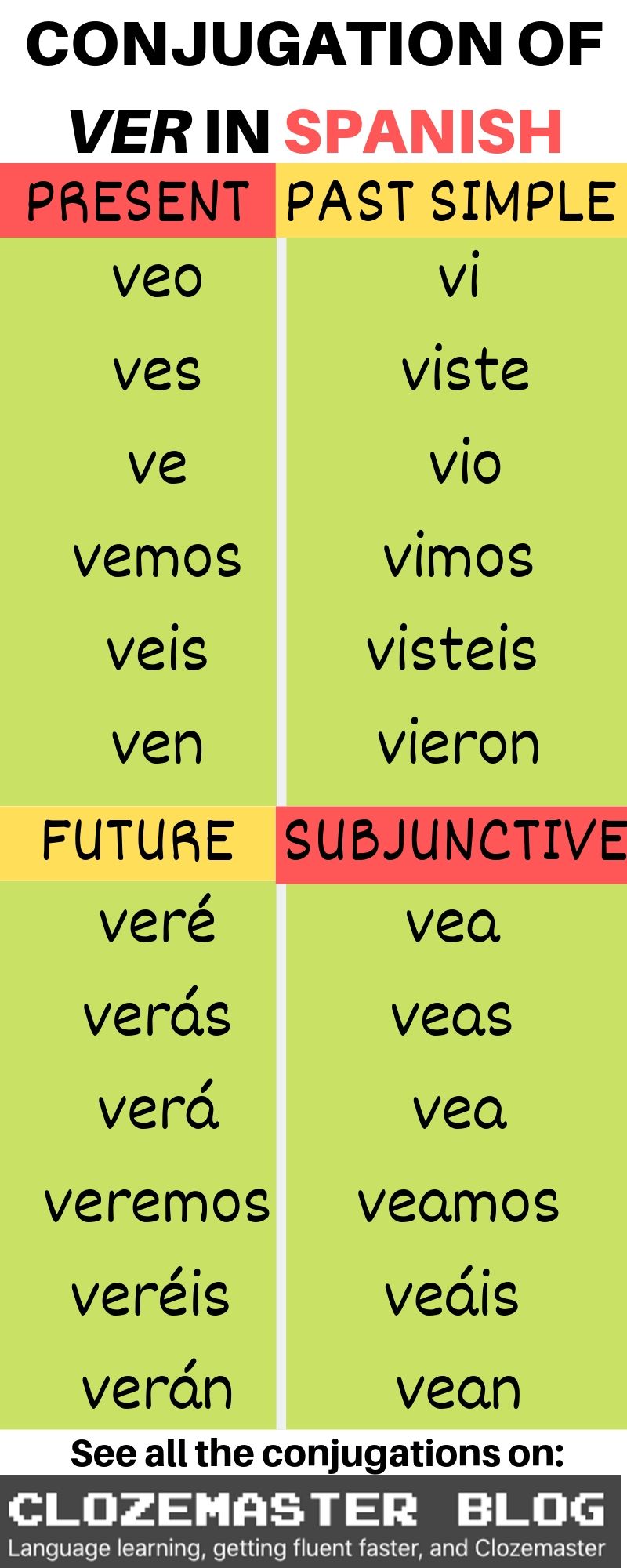
All About The Ver Conjugation In Spanish from www.clozemaster.com Learn about infinitives in spanish, learn what infinitive verbs are, and get infinitive examples by reading this article. 1) using estar and tener. Spanish is a relatively synthetic language with a moderate to high degree of inflection, which shows up mostly in spanish conjugation. Spanish verbs are based in the infinitive. The infinitive is the most basic form of a verb. (dormir) verb structure (estructura verbal) spanish verbs are divided. Using the infinitive (not the gerund) as the subject/object of the verb. They can be used alongside verbs, as a noun phrase, as a modifier, or in a question.
J for regular verbs, the endings are attached directly onto the infinitive.
It has no direct object) then this is the natural order of the sentence: (dormir) verb structure (estructura verbal) spanish verbs are divided. Fumar es malo para la salud. The simple future is a verb conjugation in the spanish language that refers to verbs in the future tense, simple, indicative mood, and active voice. Verbs in spanish are divided into three parts. Yes.like for example the word:hablar.it is an infinitive verb.in english it means:to talk. The subject is often expressed with a pronoun, let's review the personal pronouns in spanish:. Many spanish speakers rarely use personal pronouns, although this varies from country to country. In addition, the reflexive pronoun used must agree with the subject to which it refers. Spanish verbs in the infinitive form have one of these three endings: In english, infinitive is usually used to refer to the to + verb form of the verb such as to run or to eat, although according to some authorities the infinitives are run and eat. The future can also be expressed in spanish by using the future tense. J for regular verbs, the endings are attached directly onto the infinitive.